
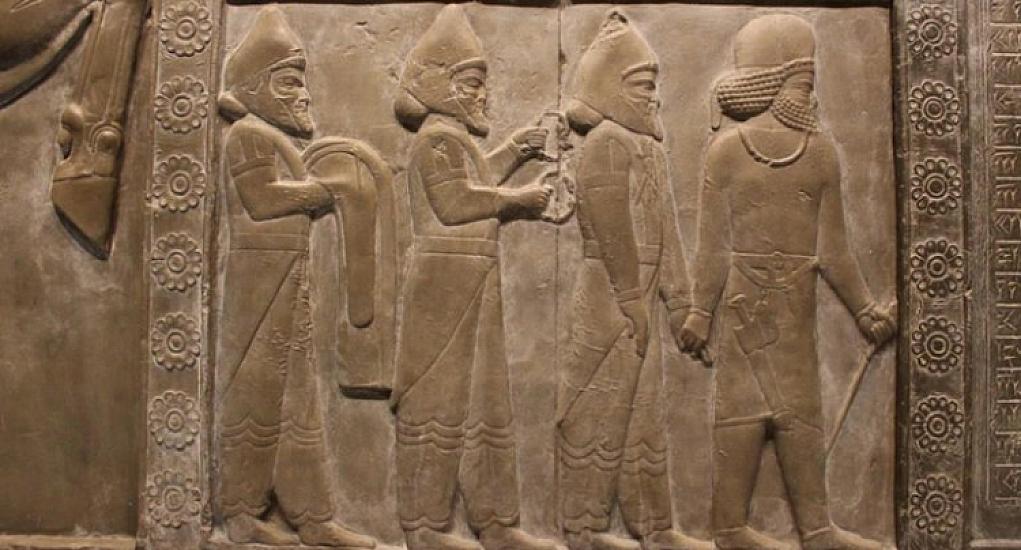
The Babylonian civilization has left numerous documents in history because they wrote on clay, which is better preserved than papyrus or parchment. However, it was not possible to read all the clay tablets immediately. As they were deciphered, interesting information about the lives of people who lived 3000 years ago has emerged.
The British Museum has been preserving a collection of clay tablets from the Babylonian period for over a century, but scholars were unable to fully read them for a long time. The help of artificial intelligence has made it possible to understand the content of the cuneiform writings. It turned out that these are dark predictions about disasters related to lunar eclipses.
The discussion concerns four tablets found in the rich city of Sippar, which was located in the territory of the ancient Babylonian state, in present-day Iraq. The tablets are dated to approximately 1200 BC. Although researchers could not fully read the ancient cuneiform for a long time, new analysis methods based on AI have revealed the texts' contents.
The Babylonian population considered lunar eclipses not only as astronomical events but also as signs of supernatural forces and harbingers of disaster. The deciphered tablets were essentially "instructions" explaining how eclipses should be interpreted.
One of the tablets states: "The eclipse occurring during the morning shift is the end of the dynasty."
Another record contains an even darker forecast: "If the eclipse suddenly completely covers the center and then suddenly clears: the ruler will die and Elam will be destroyed."
Another tablet warns about epidemics and floods. The text says: "An eclipse occurring in the evening means plague. If the eclipse is in a bad direction, nothing will save, floods will cover everything." (qaynarinfo)
Modern researchers believe that the influential Babylonian elite did not blindly believe in these signs and used astrology more as a political tool. By "correctly" interpreting natural events, decisions were guided and failures justified./Olke.az