
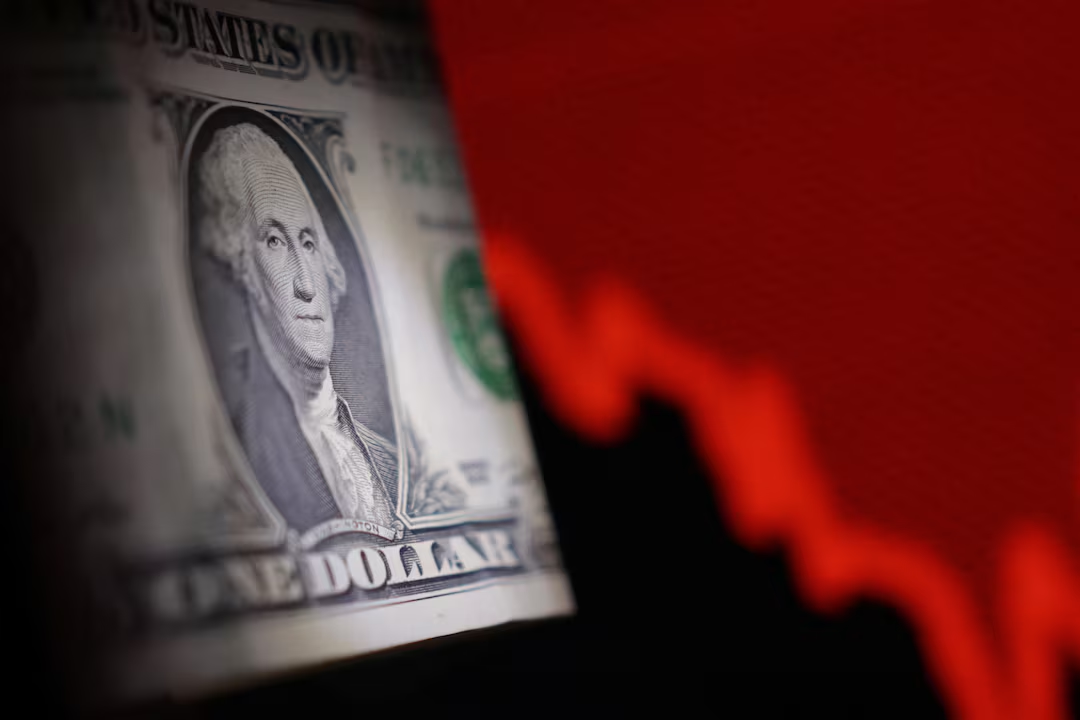
Against the background of the Iran war, the negative expectations that have arisen about the world economy, including the rise in oil and gas prices, have forced several countries into "preparing for the storm." One of these is the sale of US government bonds by foreign central banks.
According to the Financial Times, official reserves held at the New York Fed have decreased by approximately 82 billion dollars since February 25, dropping to 2.7 trillion dollars, which is the lowest level since 2012.
There are specific countries behind this process. For example, Turkey has sold about 22 billion dollars worth of government securities from its currency reserves since the beginning of the war (from February 27). At the same time, a reduction in reserves is also observed in oil-importing countries such as India and Thailand. According to experts, the reason is simple: oil is priced in dollars, and as prices rise, these countries are forced to find more dollars. For this reason, they have to sell US bonds.
Interestingly, the process is not limited only to importers. According to Bank of America analysts, some Middle Eastern oil-exporting countries also try to balance their income streams by selling these assets in certain cases, although their overall share is relatively small.
At the same time, the strengthening of the dollar puts pressure on other currencies, and central banks intervene in the currency market to try to protect their currencies. This leads to additional dollar sales and consequently increases the sale of Treasury securities.
It is no coincidence that the yield on US 10-year bonds has risen to the level of 4.4–4.5%. This means a tightening of global financial conditions. In this context, an important detail is that the approximately 30 trillion dollar US bond market still remains the largest and deepest financial market in the world and is the main reserve asset for central banks.
But the most interesting point is the change in behavior. Normally, in times of crisis, investors put their money into assets that serve as a safe haven effect (US government bonds, gold, US dollar, etc.). But now, on the contrary, sales are observed. This indicates that the global financial system is entering a more sensitive phase in terms of liquidity and balance.
Samir Aliyev,
economist