

The law allows convicts to attend the mourning gatherings of their relatives.
According to Article 89 of the Execution of Sentences Code, in colony-type penal institutions, convicts who have been sentenced for the first time for intentional crimes that do not constitute a major public danger or minor crimes, as well as for crimes committed by negligence, and who are held in general regime penal institutions and educational institutions, are allowed to leave the boundaries of the penal institutions (only within the country) for a short trip of seven days due to the death of close relatives.
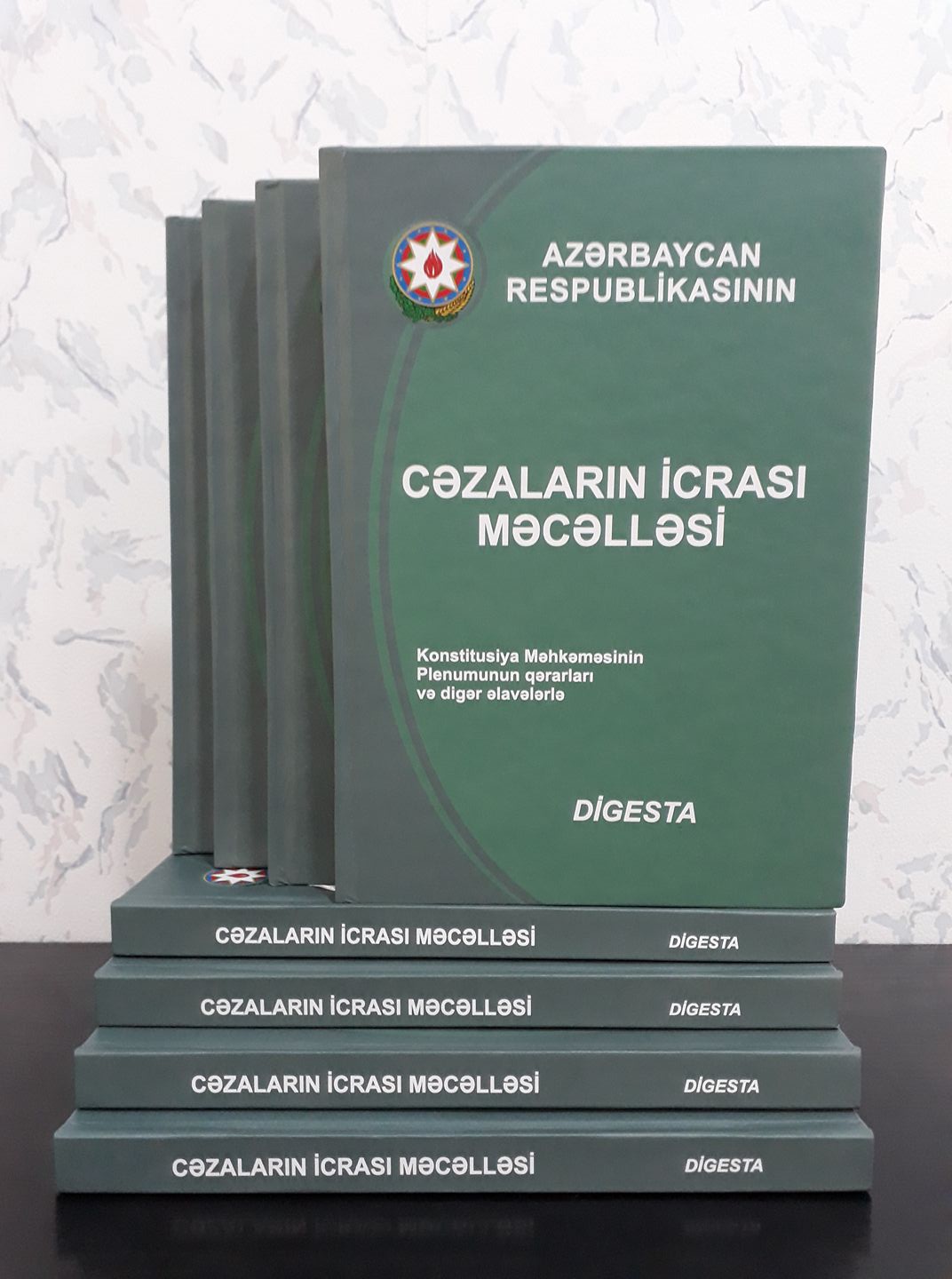
Such permission is granted by the administration of the penal institution in agreement with the Ministry of Justice.
How is it in practice? Can convicts use this right?

Speaking to Medianews.az on the topic, lawyer Elchin Sadigov states that not every convict can use this right: "First of all, there are convicts who are unaware that such a right exists. Secondly, the Execution of Sentences Code does not apply the right to attend mourning gatherings to all convicts. Thirdly, the code allows refusals even to those convicts to whom this right applies.
In my observations, convicts who have defense counsel can obtain permission to attend mourning more easily because their counsel applies to the relevant authorities in a timely manner when a mourning arises.
The decision to grant or deny permission is mainly made by the Penitentiary Service of the Ministry of Justice. Naturally, positive responses are not always given; there are refusals as well.
The body that most supports convicts' participation in mourning ceremonies is the Ombudsman’s Office. This institution can only provide assistance within its powers.
Convicts who receive permission attend the mourning ceremonies accompanied by officers from the Penitentiary Service. During the short trip, convicts are placed under certain restrictions. For example, restrictions such as not leaving a specific area or not using a phone are imposed."

Lawyer Rasul Jafarov also tells Medianews.az that participation of convicts in mourning gatherings is not an absolute right: "Article 89 of the Execution of Sentences Code states '...permission may be granted.' In other words, in the language of law, it means permission may also be denied. Consequently, the application of this right depends on the position of the facility where the convict serves the sentence and the Penitentiary Service."
Rasul Jafarov notes that there is no concrete statistical data on how many convicts are permitted to attend mourning ceremonies during the year: "However, based on my observations, I can say that this is an infrequently applied practice. That is, although few, there are convicts who use this right. My subjective opinion is that the possibilities of applying this right can be expanded."
Answering the question "Has there ever been any case of a convict who was granted permission to attend mourning breaking the law or attempting to do so (for example, escaping or trying to escape)?", Rasul Jafarov says that he has no concrete information about such cases: "I have never heard of any incidents of escape or attempted escape. Convicts who are allowed to attend mourning events are subject to a number of restrictions. The process is carried out under supervision. Convicts are accompanied to and returned from the mourning ceremony by officers of the Penitentiary Service."
I would also like to note one point. According to the legislation, persons convicted of crimes committed by negligence who have sentences of up to 5 years serve their sentences in colony-type institutions. In such institutions, convicted persons have the right to leave the institution at certain hours and move freely during those hours. Therefore, convicts serving sentences in colony-type institutions may sometimes attend mourning ceremonies without being accompanied by Penitentiary Service officers."
Naila Gasimova,
Medianews.az

Note: This article was prepared on the topic of "Civil society, legal state building" with the financial support of the Media Development Agency of the Republic of Azerbaijan and in accordance with the competition conditions.