
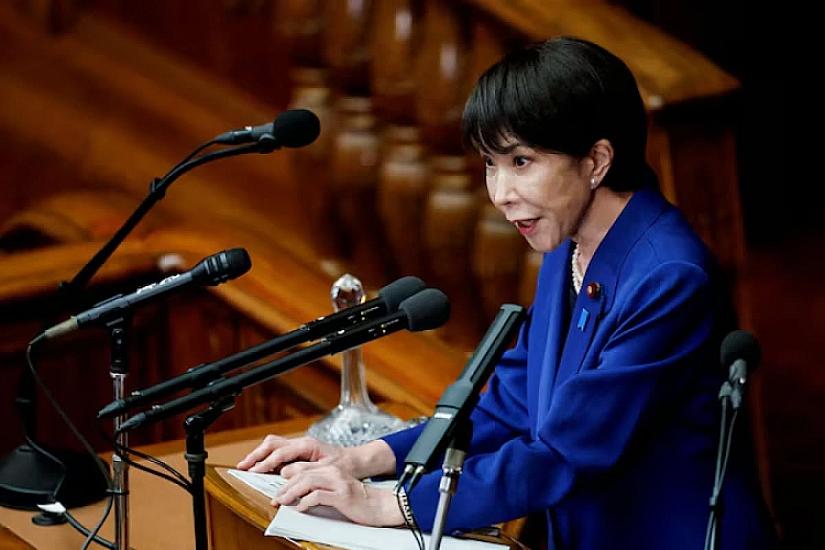
In the parliamentary elections in Japan, the ruling bloc led by Prime Minister Sanae Takaiti has won.
After the election results were announced, Takaiti stated that the promises made during the election campaign would be fulfilled. This primarily concerns solving the problems faced by the Japanese economy.
The first to congratulate Sanae Takaiti was her ally, U.S. President Donald Trump. The White House host posted on social media, congratulating Sanae Takaiti and her coalition on a big victory in very important elections. Trump recalled that the winning Liberal Democratic Party has had a historic two-thirds majority for the first time since World War II.
In the next stage, Sanae Takaiti will deal with solving the security problems that Japan faces. The main of these is relations with China, which is increasing its military power in the region.
China's patrol ships frequently approach the disputed Senkaku Islands area in the East China Sea. Although these islands belong to Japan, China also claims these territories.
Additionally, joint military exercises conducted by China and Russia in the region seriously worry Tokyo. Sanae Takaiti's earlier statement about Taiwan caused concern in Beijing.
Takaiti stated that if China attacks Taiwan, Japan will intervene. After this statement, China limited imports of seafood from Japan, tourist visits of its citizens to Japan, as well as exports of essential minerals to Japan.
There is also tension in Japan's relations with Russia. Tokyo has joined Western sanctions against Russia. Moreover, the fact that a peace treaty between Japan and Russia has not been signed so far is an additional source of tension in bilateral relations.
Nevertheless, although Sanae Takaiti evaluates relations with Russia as complicated, she emphasized that Tokyo has not lost hope of signing a peace agreement with Moscow.
However, Moscow is not inclined to compromise on the Kuril Islands claimed by Japan. Without returning the islands to Japan, signing a peace treaty between the two countries is problematic.
Meanwhile, Japan's interest in Central Asia has increased. After the United States and the European Union held summit meetings in the 5+1 format with Central Asian countries, a similar summit was held in Tokyo. The Japanese government has joined the competition for Central Asia's resources. Tokyo will invest in various projects in Central Asia for this purpose.
Tokyo's interest in Central Asia also creates conditions for increased interest in the South Caucasus region. The formation of peace and stability in the South Caucasus and the extension of transport routes to Central Asia also testify to this.
Elkhan Shahinoglu,
political scientist