
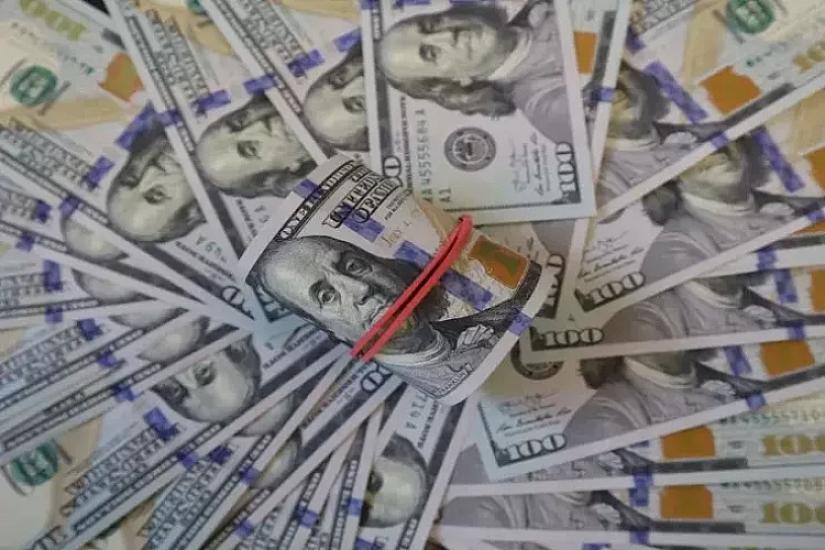
Many people have felt that money has a special smell that sets it apart from others. This smell creates a strange sense of familiarity in a person, as if they are holding not just paper but an entire history in their hand.
Medianews.az reports via Lent.az that according to chemists, this smell arises as a result of the combination of various components.
The smell of metal primarily stands out due to the reaction between leather and copper and nickel. The chemical compounds released upon touch form that specific aroma.
The smell of paper money (banknotes) is connected to completely different reasons. This is related to the type of materials used, printing inks, and protective elements.
Experts note that modern banknotes are not made from ordinary wood cellulose but from cotton-based material. This allows them to be more durable and long-lasting.
The dyes used during printing consist of special pigments. These pigments are resistant to fading and also help prevent counterfeiting.
Some protective elements create a smell noticeable only during rubbing. This is related to micro-particles embedded on the surface of the banknote.
Forensic experts state that the smell sometimes plays a role in identifying counterfeit money. Because counterfeit banknotes often have a stronger or chemical odor.
Interestingly, each country uses different dyes and materials. Therefore, different states’ currencies have different smells.
In addition to the smell, banknotes include many protective elements. These include watermarks, security threads, micro texts, and special fibers.
Some elements are visible only under ultraviolet light, which allows banks and commercial entities to quickly verify the authenticity of money.
The cotton-based structure increases the wear resistance of banknotes. They can endure folding hundreds of times.
Chemists emphasize that the smell of money is not related to bacteria and is formed during the production stage. Nevertheless, in circulation, money can collect microbes.
For this reason, experts recommend washing hands after touching cash. Coins are not entirely sterile either, and residues of metal and dirt can remain on their surface.
Despite all this, people continue to enjoy the smell of money. This is most likely related to psychological associations formed from childhood.
Thus, the smell of money has become an inseparable part of our lives both chemically and culturally.