



Although various decisions have been made in recent years to increase wages in Azerbaijan, many citizens believe that the increase in salaries does not fully cover the rise in daily expenses. Especially against the backdrop of rising prices of food products, utility payments, and other living costs, the issue of raising the minimum wage again remains relevant. So, considering the current economic situation and main indicators, how feasible does increasing the minimum wage in Azerbaijan seem in the near future?
Regarding this, Məmməd Talıblı, head of the Economic Analysis Institute and economist-expert, stated to Medianews.az that price increases in Azerbaijan are mainly observed in two directions.
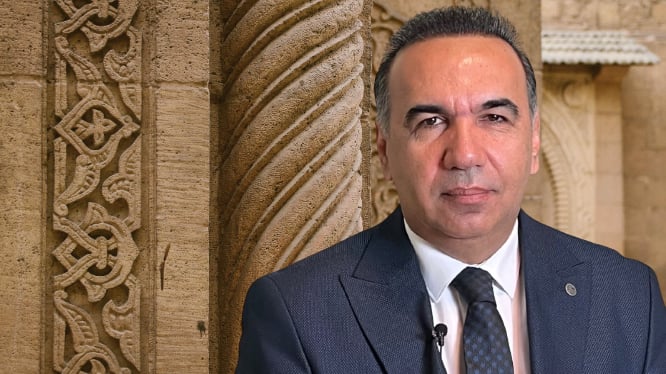
According to him, one of these is the price increase caused by monopolism. The other relates to the increase in prices of imported goods and services, which is called "import inflation."
"The mass and continuous price increases in a market economy are not considered a positive situation. However, certain price fluctuations are entirely natural. The problem is that the pace of price increases in the market surpasses the growth rate of citizens' incomes. Except for those working in public service and the finance-banking sector, people employed in education, healthcare, transportation, and other fields feel this directly,” he said.
The expert noted that the officially announced levels of price increases do not seem credible:
"The real price increase is at least double-digit. Therefore, an adequate or even more effective social policy must be implemented so that inflation does not reduce people's incomes. In the current situation, inflation rapidly erodes incomes like 'expenses.'"
M. Talıblı believes that the government's implemented policy is neither sufficiently effective nor measurable:
"Fiscal policy is more investment-oriented rather than agile and socially oriented. Indeed, 41 percent of the state budget is allocated to socially oriented expenditures; however, the social impacts of these funds are inefficient. Due to excessive prioritization of repair, construction, and building works carried out through the budget and extra-budgetary funds, an increase in people's welfare is not felt; on the contrary, a sense of impoverishment is experienced."
Oğuz Ayvaz
Medianews.az