
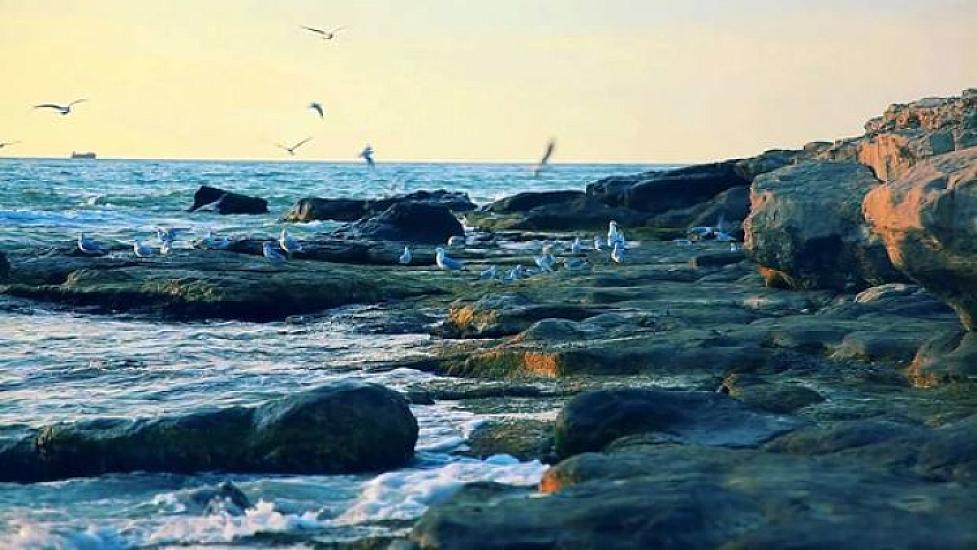
This spring was much rainier compared to previous years. On some days, the amount of precipitation exceeded the monthly norm several times. Frequent reports of intense downpours and continuous rains were also released in neighboring countries of Azerbaijan. It was reported that Lake Urmia in Iran, which had been drying up, has been revived. So, what is the situation in the Caspian Sea? The shallowing of the Caspian Sea has recently been a serious topic of discussion. Has the increased rainfall this spring affected the problem's solution in the Caspian Sea and provided any help?
Regarding the topic, Medianews.az received a statement from the Ministry of Science and Education’s Geography Institute’s Director of the Caspian Sea Geography Laboratory, Doctor of Geographical Sciences Said Safarov, who said that during the spring months, especially in the eastern regions of Azerbaijan, that is, the Caspian coastal areas, several times the monthly norms of precipitation fell: “Also, we heard that in Russia, including the Republic of Dagestan, there were powerful rains several times as well. Those areas located along the Caspian coast and receiving heavy rainfall mainly form the basins of the Kura, Terek rivers and some other relatively smaller rivers. The Kura is a major river for us. However, its role in the water balance of the Caspian Sea is not significant. Imagine, while the average annual flow of the Volga River is about 250 cubic kilometers, the maximum annual flow of the Kura is 15 cubic kilometers. Although this year the Kura River approached that maximum figure, the flow had decreased significantly in the last 4-5 years and only 4-5 cubic kilometers of water was entering the Caspian.”
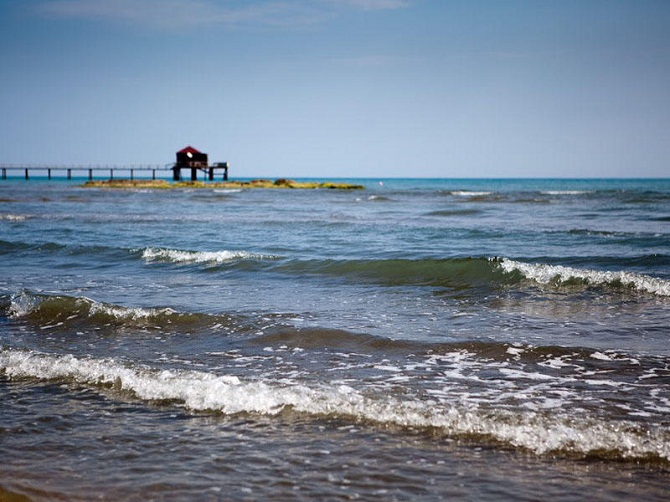
In this regard, the heavy rainfall falling on the western coastal areas of the Caspian Sea has very little role in the changes in the sea level. As for the Volga River, which accounts for more than 80 percent of the water entering the Caspian Sea, according to information, there was above-normal precipitation in its basin during winter months, especially snowfall. As a result, the rate of decline in the level of the Caspian Sea has somewhat decreased. Although there was an observed increase in the Caspian Sea level compared to January this year, the level remains still lower compared to the corresponding period of last year. This means that the heavy snow in the Volga basin during winter and the intensive rainfall recorded on the western shores of the Caspian in spring have somewhat weakened the rapid downward trend of the sea level. Nevertheless, it is still not possible to talk about a real increase in the Caspian Sea level yet.”
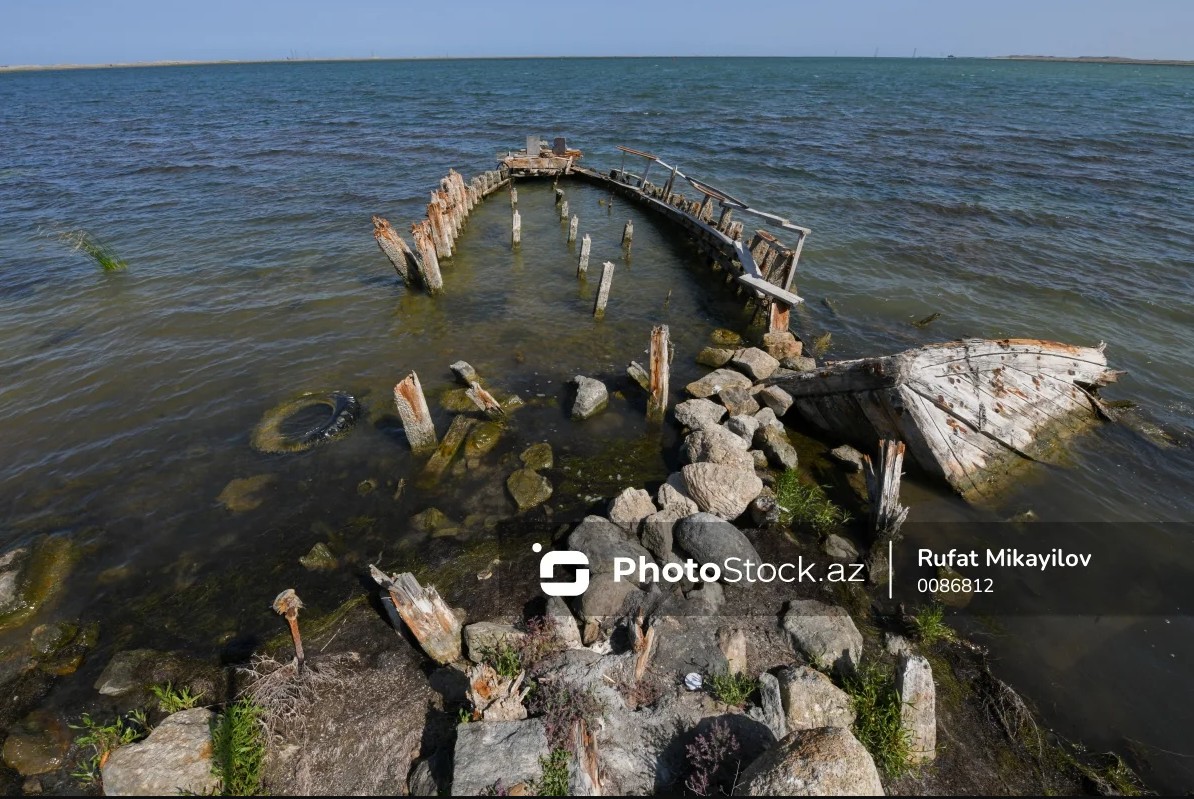
S. Safarov pointed out that at the end of this year, the level indicators of the Caspian Sea will be collected and an average figure will be derived: “After that, it will be possible to compare the situation with last year, to clearly see the dynamics, and know by how much the decrease or increase compared to last year is. For now, we can only compare the monthly indicators with the corresponding period of last year, and this comparison shows that the level is still lower than last year. The main reason is global warming, especially the temperature being much higher than the norm in the Volga basin. This is not only a problem of the year 2026 but a problem of generally warm periods. During hot months, evaporation intensifies and water use increases because of the heat. As a result, the amount of water flowing into the Caspian decreases. Because the water of the Volga River is regulated by more than 12 large reservoirs constructed on this river. These reservoirs, with a total area of more than 36 thousand square kilometers, have hydroelectric power plants, and Russian specialists work to keep the water level there from dropping. To maintain that level, they reduce the amount of water discharged from the reservoirs to the Caspian. The problem of shallowing in the Caspian Sea is precisely due to this.”
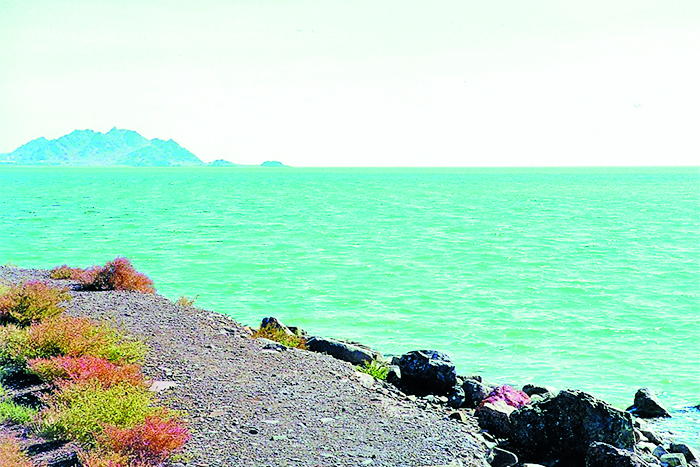
Due to the increase in temperature, evaporation from the surface of the Caspian is also gradually increasing. Even though currently the weather is comparatively cool, this is a temporary situation. Higher temperatures than last year are expected in the upcoming July and August months.”

Environmental expert Rovshan Abbasov told Medianews.az that after droughts in recent years in Azerbaijan, the increased intense rainfall creates some hopes: “If similar rainfall continues during the next 5-10 years, the decreasing trend of the Caspian Sea level may weaken. Even an increase in the water level of the Caspian may be observed. Long-term observations show that there is a process of the water level increasing and decreasing in the Caspian Sea and this process can continue in the future.”
Naila Gasimova,
Medianews.az