
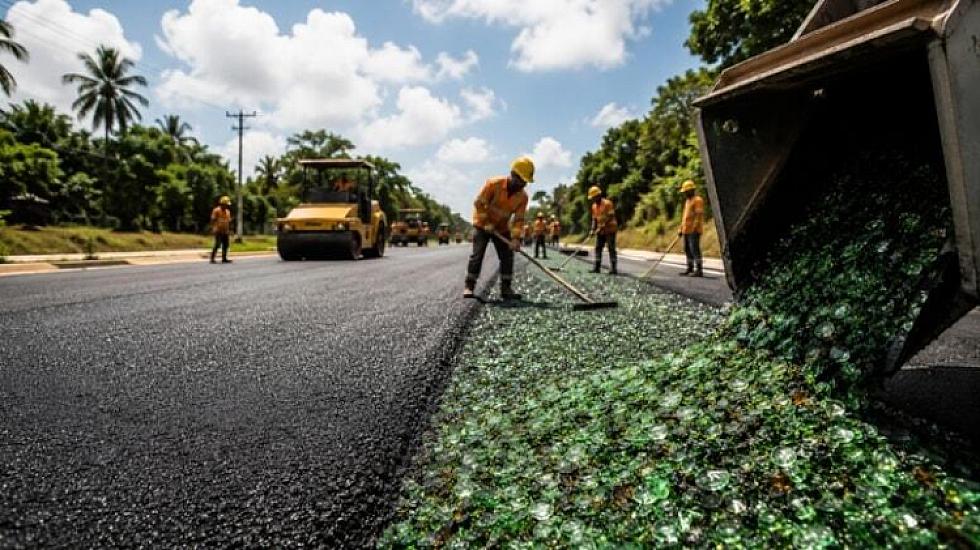
In Samoa, broken glass bottles are valued in asphalt mixtures used for road construction. This method, called "Glassphalt" (glass-asphalt), was initially tested during the repair of potholes on roads and was later included in an official pilot program. The project aims to reduce glass waste and replace some natural materials used in asphalt production with recycled glass.
According to Milli.Az, the research is conducted in collaboration with the Samoa Waste Management Association and the local construction company "R&R Construction." Supported by the United Nations Development Programme (UNDP), glass fragments are added to the asphalt mixture in various proportions within the framework of the project, and its quality is monitored. The initial tests were successfully carried out on roads at the landfill entrance.
Experts state that asphalt containing glass additives may have several advantages:
Such asphalt is believed to be more resistant to cracking.
Glass fragments are expected to provide more friction to the road, making it less slippery.
This method has prevented hundreds of tons of glass waste from going to landfills.
The capacity of landfills in Samoa is nearly full, so recycling glass bottles and using them in road construction reduces the volume of waste and also helps conserve natural raw material resources.
Additionally, the project includes the manufacture of various products such as concrete blocks, curbstones, and tombstones from glass waste. The program also contributes to the development of a circular economy and the creation of new jobs for youth.
Officials say that the long-term results of "glassphalt" are being monitored, and if positive, this method will be applied in wider areas.