
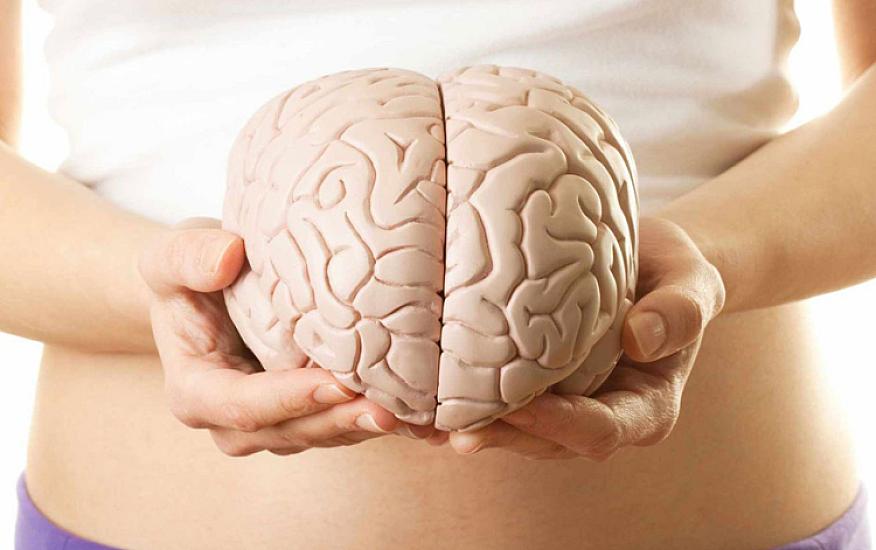
German scientists have announced for the first time that frozen mouse brain tissue can partially restore its function after being thawed.
Medianews.az reports, citing Qafqazinfo, that the research results were published in the scientific journal "Nature."
According to the study, when brain tissue is thawed after the freezing process, nerve activity was observed to restart to some extent. Specialists believe that this method could open new opportunities in the future for treating severe brain injuries, creating organ banks, and even cryopreservation of mammalian bodies.
The study was conducted under the leadership of neurologist Alexander German at Erlangen-Nuremberg University. He stated that the main question of the research was: "If brain function arises from its physical structure, how is it possible to reactivate it after it has completely stopped?"
According to the scientists, one of the main reasons brain tissue loses its function after freezing is the damage caused by ice crystals to the cells. The crystals formed during freezing disrupt the delicate structure of cells, damage nerve connections, and stop cellular metabolism.
To overcome this problem, the researchers used a method called "vitrification." This method allows liquids to be cooled very quickly, transforming them into a glass-like structure without forming ice crystals.
The study used tissue slices about 350 micrometers thick taken from mouse brains. These samples included the hippocampus region, which is important for learning and memory.
The tissues were first treated with a solution containing protective chemicals, then rapidly frozen with liquid nitrogen at -196°C. The samples were stored at -150°C for periods ranging from 10 minutes up to 7 days.
Microscopic analyses conducted after thawing the frozen tissue showed that the membranes of nerve cells mostly remained intact. Electrical measurements revealed that the neurons' responses to stimuli were largely close to normal.
Moreover, signals related to "long-term potentiation," considered one of the primary mechanisms for learning and memory, were also observed.
The researchers state that the experiments were carried out only on small brain tissue slices kept under laboratory conditions, and the method cannot yet be applied to whole brains or living organisms.
Nevertheless, scientists believe these results could be an important step in advancing cryogenic technologies. In the future, such methods might be used for preserving tissues in severe brain trauma, long-term storage for organ transplantation, and protecting large organs.
Specialists emphasize that many scientific barriers still remain before science fiction scenarios such as long-term cryogenic sleep or whole-body freezing of humans can become reality.