
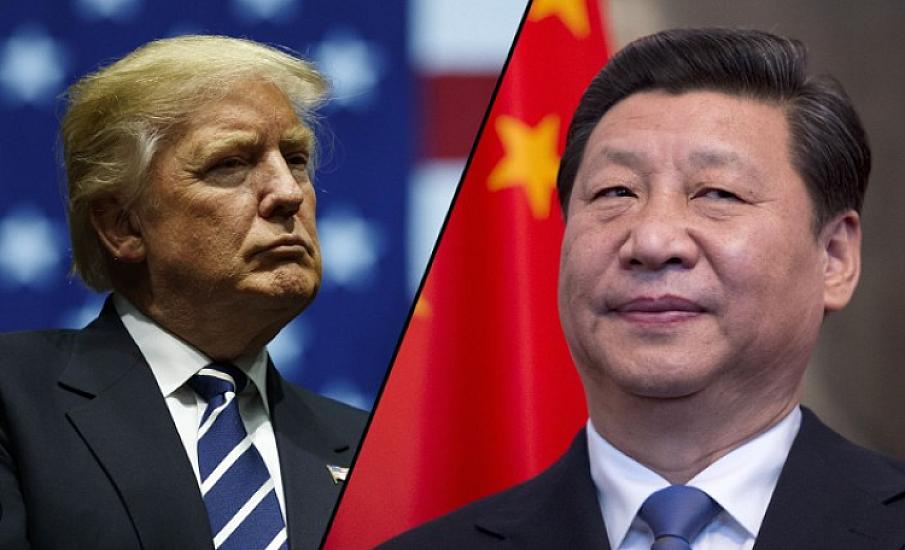
US President Donald Trump's trip to China, postponed in March, is expected to take place in the middle of this month. However, the White House has not yet announced the host's decision regarding the trip.
There are several reasons for this.
Firstly, tensions with Iran have deepened the disagreement between the US and China. The US's blockade of the Strait of Hormuz has negatively affected China's economic power. China cannot buy cheap oil from Iran.
Secondly, Donald Trump does not want to discuss the Taiwan issue in Beijing. Meanwhile, Chinese leader Xi Jinping plans to demand that Trump stop the US's military support to Taiwan. According to Reuters agency, Beijing is trying to turn the Taiwan issue into a subject of discussion with Washington.
There is also concern in Taiwan itself, with a population of 23 million, about Donald Trump's trip to Beijing. Taiwan's leadership fears that if Trump reaches an economic agreement with Xi Jinping, Washington's support for the island state will decrease. Taiwanese officials openly express their concerns that the island might become a "subject of talks" between the two leaders.
Trump plans to sign an agreement in Beijing regarding the sale of US civilian airplanes and agricultural products to China. In exchange for the purchases from the US, Beijing does not want Washington to interfere in the Taiwan issue. Beijing wants to be sure that if Taiwan is unified with China by military or "soft power" means, Washington will not prevent it.
The US State Department does not respond to Beijing's statements about Taiwan. Because the US has declared that it is committed to the so-called "One China" policy. That is, the US recognizes Taiwan as part of China's territory. At the same time, Washington also recognizes Taiwan's right to self-defense.
These two positions contradict each other. Taiwan is a strong power in the semiconductor industry. The US has broad economic relations not only with China but also with Taiwan. Moreover, Taiwanese companies have invested billions of dollars in the US. If Taiwan is united with China, the fate of these investments will be uncertain.
The Trump administration claims that there has been no change in the US policy on Taiwan. However, White House officials emphasize that Trump has given Taiwan more weapons in his second term than his predecessor, Joseph Biden, did during his presidency. However, this argument has not calmed Taiwan's leadership.
Meanwhile, the meeting between Taiwan's President William Lai and Eswatini's King Mswati III caused Beijing's displeasure. At the meeting, Taiwan's president stated that they have the right to connect with the world and no country can prevent this. Despite Beijing's demand that other countries cut ties with Taiwan, the island state tries to expand its trade relations with various countries. Nevertheless, due to Beijing's pressure, Taiwan now has diplomatic relations with only 12 countries.
Elkhan Shahinoglu,
political analyst