
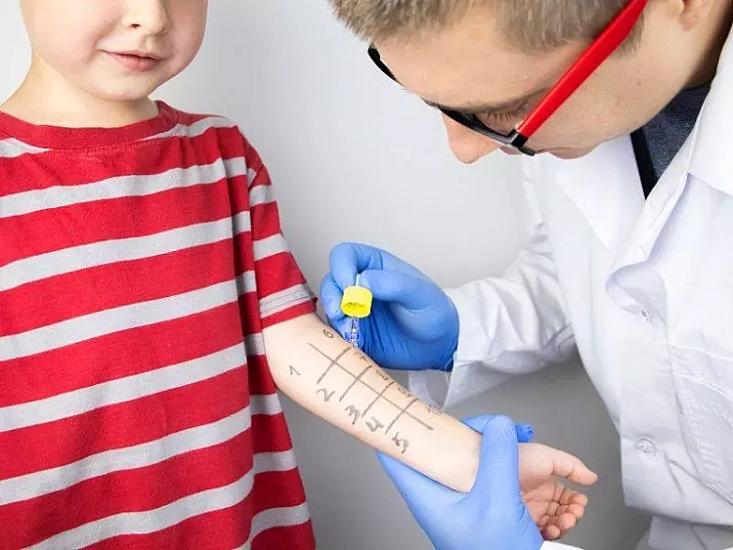
One of the most commonly used methods for diagnosing allergies in children is the skin prick test.
According to Medianews.az, this test is considered fast, relatively painless, and reliable. The aim is to determine the child's reaction to certain allergens.
In the test, very small amounts of suspected allergens such as pollen, house dust, animal fur, and food are placed on the skin surface and lightly pricked. If the child is allergic, redness and swelling will appear in that area within a few minutes.
When is the test performed?
- Repeated sneezing, nasal discharge, congestion
- Eye itching, watering, redness
- Cough, shortness of breath, wheezing
- Skin itching, eczema, or redness
- Food and insect allergies
Precautions before the test
- Antihistamine drugs can affect the test, so consultation with a doctor is necessary 3–7 days before the test.
- There should be no eczema, infection, or sunburn on the test area.
- It is important to explain the test to the child in simple language and calm them down.
Conducting the test
- The test area is cleaned.
- Each allergen is placed on the skin in droplet form; positive (histamine) and negative (saline) controls are applied.
- The allergen is lightly pricked into the upper layer of the skin with a sterile lancet or needle.
- Wait for 15–20 minutes, swelling and redness are measured.
- Results are evaluated by the doctor along with the child's medical history and physical examination.
Risks and side effects
- Short-term redness and itching are normal.
- Rarely, serious reactions such as widespread itching, urticaria, and shortness of breath may occur. The test should only be performed under the supervision of an allergy specialist.
Note that the test shows the presence of allergy but does not determine its severity. Results should always be evaluated together with the clinical condition. If you suspect your child has an allergy, be sure to consult a doctor before the test.
Medianews.az