
It has been 34 years since the Khojaly genocide, one of the darkest tragedies in human history that took place in the 1990s. During the merciless winter of 1992 - on the night of February 25-26, the genocide committed by Armenian-Russian forces has left an indelible mark on the memory of every Azerbaijani.
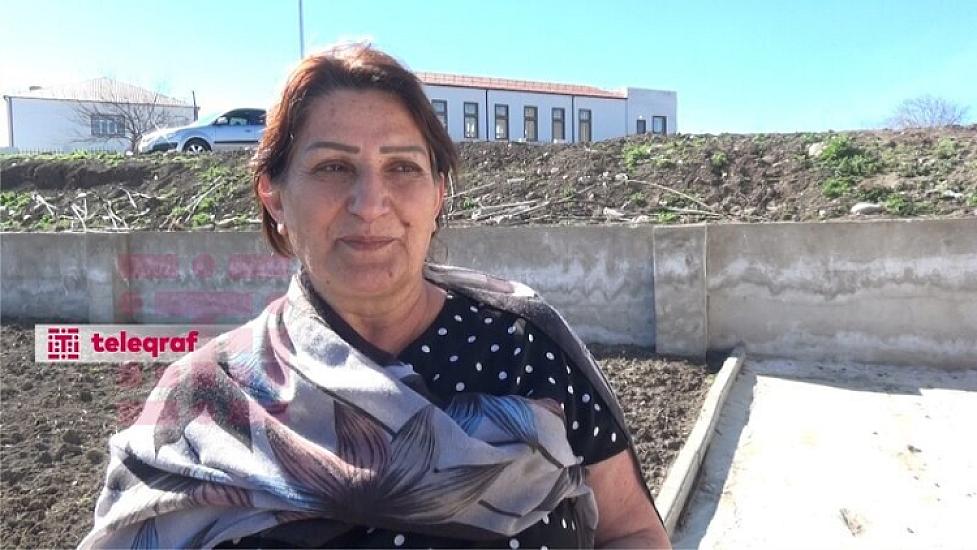
Medianews.az reports that Shafika Alasgarova, who lived through those horrors and left Khojaly with her three infant daughters, spoke to Teleqraf’s Karabakh bureau about the terrors of those days, recounting the severe trials they faced during five days of siege:
"We were informed by our neighbor that Khojaly was under siege. We left the house and gathered in the neighbor’s basement, spending the night there. Fighters coming from the post told us that most residents had left the city as soon as darkness fell. We left the basement and headed to the area called 'Beshmertebe'. We remained besieged in 'Beshmertebe' for three days."
“There was a boy named Shahid with us. He now works in the police. We had no weapons left. Shahid went out of the building and brought back cartridges in boxes. The fighting resumed. My brother-in-law’s fiancé named Elshad was martyred there.”
"Part of the group was fighting. Another part was throwing us out the window of the second floor. We crossed the road and headed into the forest. When we crossed the Qarqar river, our feet were wet. Our feet began to freeze in the forest. At that time, my three daughters were with me. The youngest was one and a half years old, the eldest was about six. There was a man named Baxish with us who has since passed away. Seeing my daughters were freezing, he took off his jacket and covered the children."
"My son, I will say without shame. The weather was very cold; seeing the children’s feet freezing, I took off my underwear and wrapped their feet with it. We walked all day and night toward the Agdam direction, hungry and thirsty. When the children asked for bread, I squeezed the snow in my hands and gave it to them. They threw the snow away and asked for 'papa' (bread)."
"In the snowy and frosty weather, I lost one of my daughters. I searched for her for hours in the middle of the forest before finding her. We could not even talk much for fear that the Armenians might hear our voices."
"Finally, on the fifth day of the siege, people from Agdam found our group. They took us to Agdam city. On the way, they told me that my middle daughter had died. At that moment all my feelings froze. I felt nothing. They took my deceased daughter to the mosque in Agdam. They placed her among the dead. I stood aside and watched. Even the death of my child did not reach me."
"My daughter remained among the dead for one night. The next day, we went to the mosque’s front for the burial. They were loading the bodies onto trucks one by one to take away. When they were about to take my daughter for burial, the cleric asked whose child this was, saying she was breathing. When he opened her face, I saw that it was my daughter. After taking the child, they took us to Baku and admitted us to the hospital."
Shafika Alasgarova says that her feet were frostbitten: "At the hospital, they wanted to amputate my feet. The doctor said that this woman has three daughters and insisted on treatment to save my feet. That doctor treated my feet. Two of my daughters’ feet were also completely frostbitten. That doctor treated and healed my daughters as well."
Shafika Alasgarova says she raised her daughters with difficulty and provided for their higher education: "Now each of them holds a certain position. My eldest daughter works at Ganja Agrarian University, the middle one has two diplomas and works at the Khankendi representation. The youngest is a teacher."
Having experienced the horrors of Khojaly, Shafika says she is happy today: "I am very happy that Khojaly was liberated from occupation and we moved back to our hometown. When my daughters informed me that we were going to Khojaly, I only cried out of joy that day. Though it seems like a dream, it is a real fact that after many years, I am living in my own house."
It should be noted that after years of longing, people from Khojaly returning to their ancestral lands are rebuilding their lives anew. In place of the destroyed houses, repaired, bright homes now stand. The government is restoring houses, building roads, and ensuring residents have uninterrupted 24-hour gas, electricity, and water supply.
Today, Khojaly is not just being rebuilt; it is being reborn...