
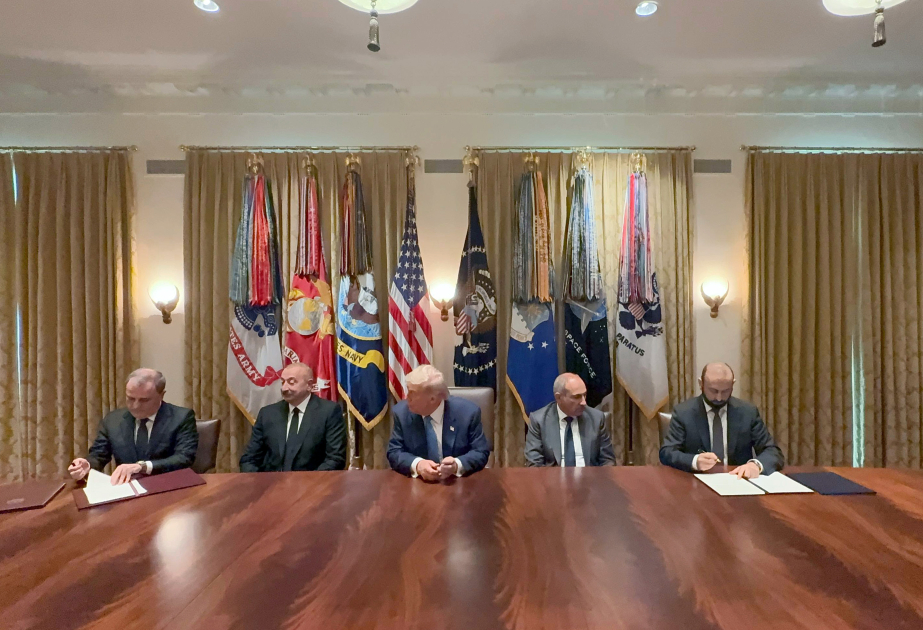
Nearly seven months have passed since the text of the peace agreement between Azerbaijan and Armenia was initialed. It should be recalled that the draft agreement on peace and the establishment of interstate relations was initialed by the foreign ministers of the two countries on August 8 last year in Washington.
The exact date when the agreement itself will be signed is unknown. Azerbaijan places the condition that Armenia update its Constitution before signing.
Some experts suggest that the signing of the peace agreement should be postponed until after the Armenian Constitution is updated and that its ratification in parliament should be delayed.
Can the peace agreement between Azerbaijan and Armenia be signed before the constitutional changes in Armenia?
Speaking to Medianews.az on the subject, Member of the National Assembly and political analyst Hikmat Babayev stated that the sole official demand from Baku for signing the peace agreement initialed between Armenia and Azerbaijan is the removal of territorial claims from the Armenian Constitution: “Until this demand is fulfilled, it appears very difficult to put the final signatures on the document. However, if situations arise that could make the regional situation even more dangerous and create new threats to peace, it is possible to consider alternative options. This probability is very low but not excluded. It could depend on how real the threats from neighboring imperialist states targeting peace are.”
If the only political team in Armenia capable of signing the peace agreement – the Nikol Pashinyan government – is overthrown and replaced by more radical forces, certain steps towards the full implementation of the document might be considered. This is a small probability, but nothing is entirely excluded in politics.
Let us hope that the position of powerful centers threatening peace in the region will not reach a level that necessitates extraordinary decisions. Whether this will happen or not will become clearer as the election date in Armenia approaches.”
Parliamentary elections in Armenia are scheduled for June 7 this year.
In 1988, a separatist movement started demanding the transfer of Azerbaijan’s Nagorno-Karabakh region to Armenia, which gradually turned into aggression.
On December 1, 1989, a joint meeting of the Armenian parliament and the so-called Nagorno-Karabakh National Council decided to unite Nagorno-Karabakh with Armenia.
On August 23, 1990, the Armenian parliament adopted a declaration of independence. The declaration referred to the decision of December 1, 1989, thus indirectly recognizing Nagorno-Karabakh as Armenian territory.
On September 2, 1991, the Nagorno-Karabakh Armenians declared the region an “independent state,” and on September 21, an independence referendum was held in Armenia. Subsequently, military aggression accelerated, and by May 1994, one-sixth of Azerbaijan had been occupied.
On July 5, 1995, Armenia adopted its Constitution through a referendum. The Constitution, updated in referendums on November 27, 2005, and December 6, 2015, references the declaration of August 23, 1990, in its preamble. Azerbaijan regards this as the basis for demanding the update of the Armenian Constitution.
Between 1988 and 1994, southwestern Azerbaijan and one village in the Sadarak district and seven villages in the Gazakh district fell under occupation.
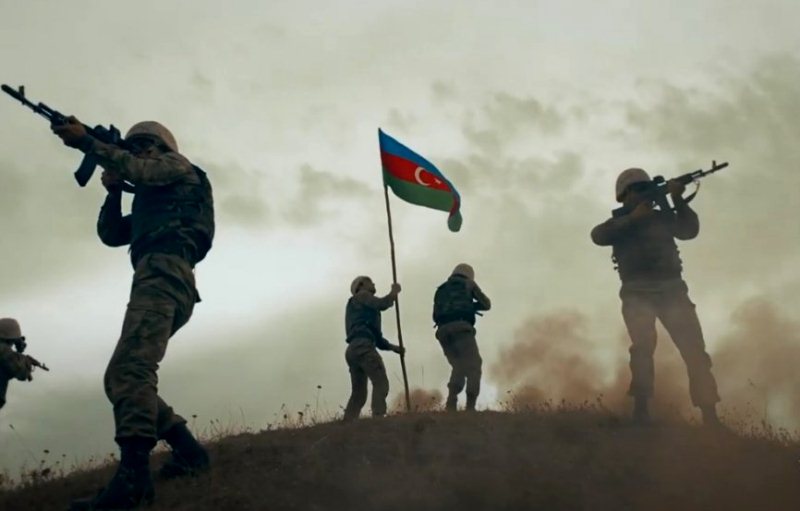
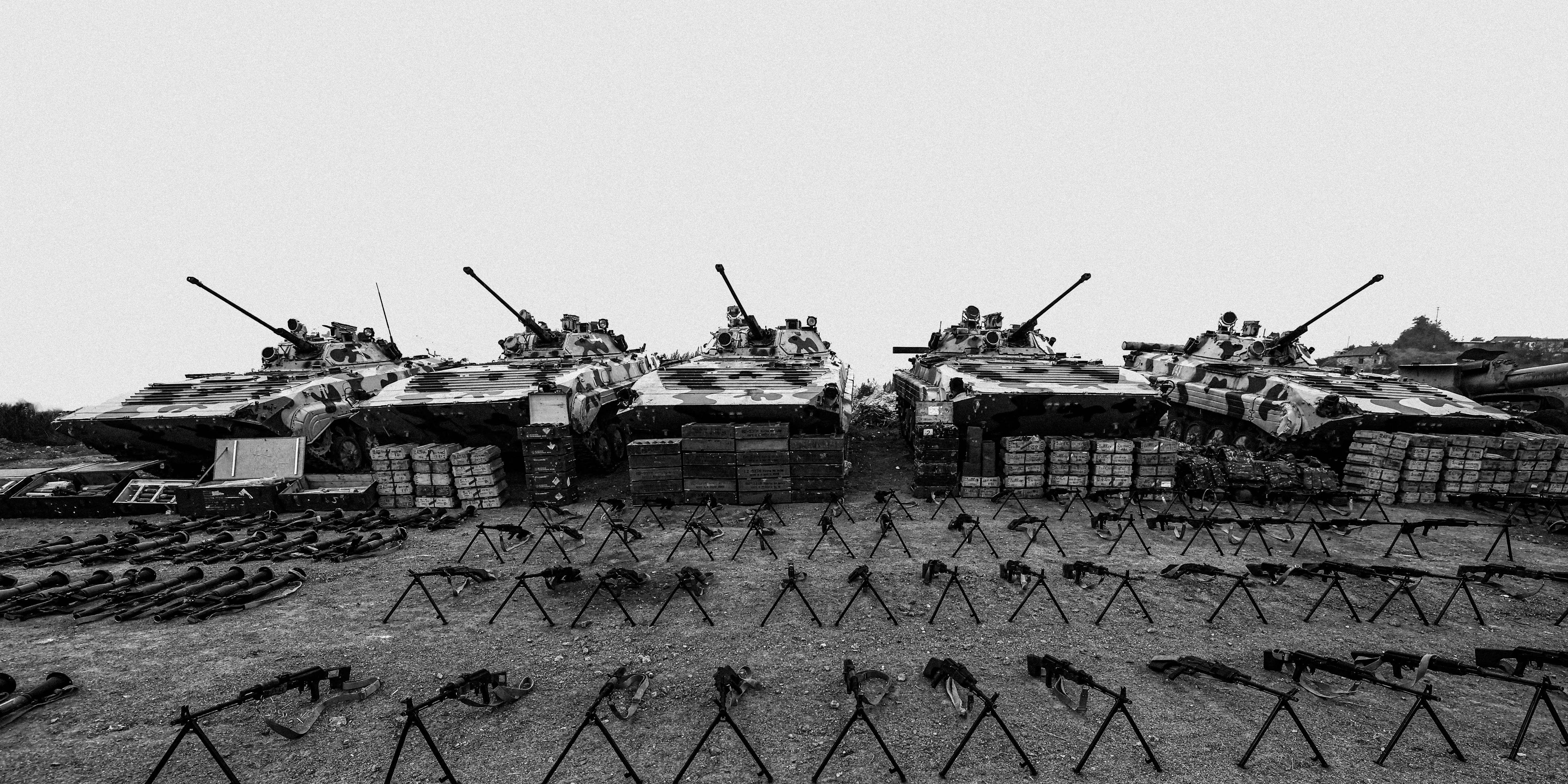
From September 27 to November 10, 2020, as a result of Azerbaijan’s war and subsequent negotiations and local military operations, the Jabrayil, Fuzuli, Zangilan, Gubadli, Aghdam, Kalbajar, and Lachin districts were completely, and parts of Shusha, Khojavend, Khojaly, and Aghdere districts were partially liberated.
On September 19, 2023, Azerbaijan launched a military operation against the occupying regime controlling Khankendi, Khojaly, Aghdere, Khojavend cities, and parts of the Shusha, Khojaly, Khojavend, and Aghdere districts. The next day, the regime committed to disarmament, and from September 24, Armenians began a mass exodus from Karabakh. On September 28, the regime surrendered itself.
On May 24, 2024, Armenia withdrew from the Aşağı Əskipara, Bağanıs Ayrım, Xeyrimli, and Qızılhacılı villages of Gazakh.
The villages of Kerki in the Sadarak district and Barkhudarly, Sofulu, Yuxarı Əskipara in the Gazakh district remain enclaved, surrounded by Armenian territory.
Naila Gasimova,
Medianews.az