
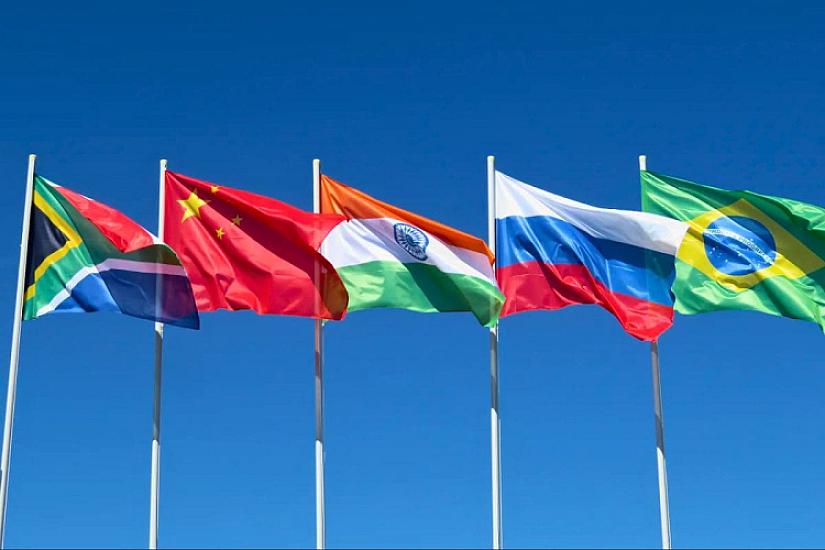
Wars in the Middle East have put the BRICS organization in a difficult position. The issue is that among the organization's new members are Iran and the United Arab Emirates. The country that Iran launched the most rockets and drones at in the recent war was precisely the United Arab Emirates.
Although BRICS is against the war of the US and Israel on Iran, it could not support Iran bombing another member of the organization – the United Arab Emirates. Therefore, instead of a unified statement from the organization, BRICS members have individually issued statements related to the war.
BRICS strives to establish a multipolar world. Starting from January 2026, the presidency of the BRICS (Brazil, Russia, India, China, South Africa) organization will pass to India.
This September, the organization's summit will be held in New Delhi. At the summit to be held in India, the main focus will be on resolving trade and financial issues among member countries. Member countries are trying to facilitate trade based on national currencies and reduce their dependence on the dollar. In this regard, discussions are ongoing on the importance of settlements using digital currencies. The goal of the member countries is to establish a settlement system alternative to SWIFT. However, this will not be easy.
Historically, the US has regarded the status of the dollar as a pillar of its high national security and economic dominance. US President Donald Trump has threatened countries attempting to abandon the dollar in trade with sanctions. The majority of BRICS countries are interested in expanding trade relations with the US. Therefore, it is difficult for those states to completely abandon the dollar.
Meanwhile, the military cooperation agreement signed between Russia and India in February 2025 has been approved. According to this agreement, the parties can deploy up to 3,000 military personnel, five warships, and 10 military aircraft on each other’s territory. The agreement between the two countries envisages mutual deployment of military personnel, warships, and aircraft to maintain peace and stability in the region. According to the agreement, the military contingents sent to each other's territories conduct joint exercises, provide humanitarian aid, eliminate the consequences of natural and man-made disasters, and protect peace and stability in other cases agreed upon by the parties. The entry into force of the agreement amid ongoing tensions in the Middle East has increased the strategic significance of the document.
Nevertheless, the current agreement does not imply India's support for Moscow in Russia's aggressive war against Ukraine. What is important for India is the continuation of military equipment purchases from Russia. According to the Stockholm International Peace Research Institute, India remains the world's second largest arms importer. Russia continues to be the main supplier for this country, accounting for 40 percent of India's arms imports. Nevertheless, New Delhi is trying to reduce arms imports from Russia. New Delhi is expanding military-technical cooperation with the US and European countries.
"Atlas" Research Center