

The World Health Organization has detected hantavirus on a cruise ship traveling the Argentina-Cape Verde route. Three people have died from the virus.
What is hantavirus? How is this virus transmitted? Has there ever been a hantavirus infection in Azerbaijan? Is there currently a possibility of this virus spreading and reaching Azerbaijan? What measures should we take to protect ourselves from the virus?

Regarding the topic, Medianews.az- spoke with infectious disease specialist Polina Aliyeva, who stated that hantavirus infection primarily belongs to a group of viruses transmitted by rodents: “These types of viruses do not generally spread directly from person to person (there are rare exceptions), the main source of infection is the excretions of infected rats or other rodents – urine, feces, and saliva. People can become infected when they inhale particles of these excretions that have dried and mixed with the air. In rarer cases, infection can also occur through rodent bites.”
Concerning the specific incident reported by the World Health Organization, the possibility of such infections spreading in closed environments like cruise ships is being carefully investigated. However, the main point is that the spread of hantavirus definitely requires the presence of rodents. In other words, it is not a classic respiratory virus — for example, like COVID-19 — that spreads rapidly from person to person.”
The infectious disease specialist noted that hantavirus infections are observed in two main clinical forms: “One of them, more commonly seen in the Americas, is the hantavirus pulmonary syndrome (HPS) that affects the lungs. The other, found in Europe and Asia, affecting the kidneys, is known as hemorrhagic fever with renal syndrome (HFRS). Both forms can have a severe course.”

The initial symptoms of the disease are non-specific and usually start with fever, fatigue, muscle pain, headache, and nausea. In more severe cases, respiratory difficulties or kidney function impairments may develop. The incubation period of the virus, meaning the time between infection and the appearance of symptoms, generally ranges between 1 to 5 weeks.
In terms of treatment, there is no widely available specific antiviral therapy for hantavirus. Treatment mainly focuses on alleviating symptoms and supporting the body. In severe cases, patients may be treated in intensive care. For some forms, particularly hantavirus pulmonary syndrome, the mortality rate can reach 30-40%, showing the seriousness of the disease. Currently, there is no widely used universal vaccine against this virus.”
Regarding the situation of hantavirus in Azerbaijan, Polina Aliyeva stated that so far, no widespread or severe epidemic cases have been recorded in the country: “Whether sporadic (isolated) cases have occurred depends primarily on epidemiological monitoring data, but the overall picture is stable. This is related to the fact that the virus spreads mostly in certain geographic zones, especially in North and South America, as well as some regions of Europe and Asia.”
According to Polina Aliyeva, it would not be correct to consider the spread of this virus to Azerbaijan as a high-risk situation: “Because the virus spread requires a specific ecological chain, namely a population of infected rodents. Even considering international travel, hantavirus is not regarded as a virus with pandemic potential.”
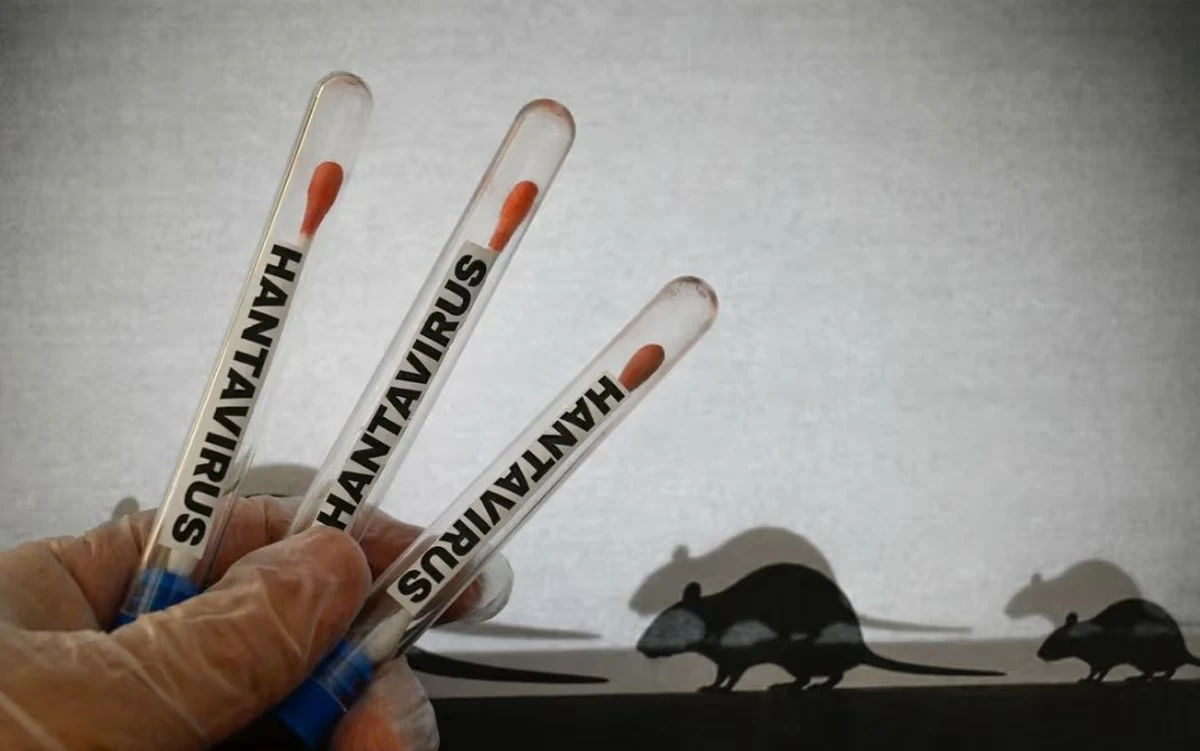
Regarding protective measures, Polina Aliyeva stated that the main principle is very simple: to avoid contact with rodents as much as possible and to adhere to hygiene rules.
Specifically:
- Use masks and gloves when cleaning basements, warehouses, and spaces unused for long periods,
- Avoid direct contact with rodent excretions,
- Do not leave food products exposed,
- Strengthen disinfection and pest control measures in residential and work areas.
The infectious disease specialist emphasized that even the news of hantavirus detection in distant countries may cause concern among some people in Azerbaijan, but there is no reason for panic: “Being informed while accurately assessing risks is the most appropriate approach.”
Nailə Qasımova,
Medianews.az