
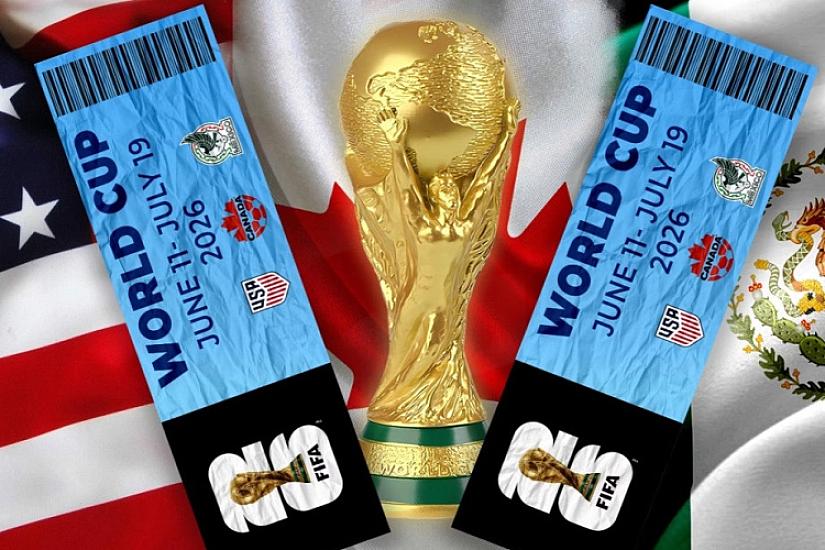
From June 11 to July 19, the 23rd FIFA World Cup, which will be held in the USA, Canada, and Mexico, is preparing to go down in history not only for the number of participating teams but also for ticket prices.
Medianews.az reports that the World Cup, which will feature 48 teams for the first time and consist of 104 matches, is being turned by organizers into one of the biggest commercial projects in football history. As a result, fans face significantly higher prices compared to previous World Cups.
From group stage to final: how do prices change?
In the championship, the price of regular tickets varies depending on the stage of the match and the category of seats in the stadium.
The standard price range is as follows:
- Group stage matches: $60–$735
- Round of 32: $105–$665
- Round of 16: $118–$318
- Quarterfinals: $235–$665
- Semifinals: $412–$1118
- Third place match: $235–$588
- Final: $1825–$6730.
These figures cover only the official sale prices set by FIFA. Prices in the resale market may be higher.
How realistically accessible is the $60 ticket?
FIFA has emphasized that the cheapest World Cup tickets will start at $60. However, data shows that the tickets falling into this category constitute a very small portion of the total sales volume.
Tickets priced at $60 are mainly intended for seats located in the highest and corner sections of the stadiums. This category is available only for some group stage matches and almost disappears in later stages. Therefore, the majority of fans actually face tickets starting in the $185–$350 range. The most sold seats are first and second category tickets ranging from $350 to $735.
What does the dynamic pricing system mean?
This year, FIFA is using the "dynamic pricing" model extensively for the first time at the World Cup. According to this system, the ticket price depends not only on the stage and seat category but also fluctuates based on demand.
For example, as interest in the matches of favorites like Argentina and France grows, ticket prices in some cities have increased several times. Thus, two tickets of the same category may be sold at different prices for different matches.
How much should a fan spend for the World Cup?
According to calculations, a fan who wants to watch a match in mid-range seats will need to spend between $450 and $800.
A fan who wants to attend three group stage matches of their favorite team can expect total costs between $1200 and $2500.
The expenses for a fan wishing to follow their team from the start of the tournament to the final can start from $3180 and exceed $15,000. This amount does not include transportation and accommodation costs.
Comparison with the 2022 championship held in Qatar
Comparing this year’s World Cup with the previous one, the average price of the opening match is about 83% more expensive. A ticket that cost $300 in Qatar now costs $550.
The average price for group stage matches was $160 in Qatar, now it is $225.
Prices for the quarterfinal stage have risen by about 66%, averaging $750.
The biggest difference is observed in the final match tickets. The average price of the 2022 final was $1100, while in the 2026 final, this figure exceeds $2800. In other words, there is approximately a 154% increase.
VIP tickets create a separate market
The fastest rising segment in the World Cup is VIP and "hospitality" packages.
The price of VIP packages for one match ranges from $1350 to $25,000.
Packages covering several matches are sold from $5300 up to $40,000.
The highest-level packages intended for the final match rise from $57,000 to $73,000. These packages include seats in special lounges, food and beverages, separate entrance and exit access, and other services.
Costs exceeding ticket prices
The main problem for fans planning to travel to the World Cup is not only the ticket. Hotel prices in cities hosting matches in the USA and Canada have already reached record levels.
Particularly in cities like Dallas, New Jersey, and San Francisco, accommodation costs are expected to approach ticket prices. Therefore, experts recommend fans stay in nearby residential areas instead of main cities.
World Cup generating record revenue
The 2026 World Cup resembles more a global commercial project than a sporting event. Increasing the number of teams from 32 to 48, raising the number of matches from 64 to 104, and involving the major North American market create an opportunity for FIFA to achieve record revenue.
For this reason, the 2026 World Cup may be remembered as the most attended and most expensive World Cup in history. For the average fan, participating in the football festival will cost significantly more compared to previous tournaments.
Recall that Uruguay was world champion in 1930 and 1950; Italy in 1934, 1938, 1982 and 2006; Germany (West Germany) in 1954, 1974, 1990 and 2014; Brazil in 1958, 1962, 1970, 1994 and 2002; England in 1966; Argentina in 1978, 1986 and 2022; France in 1998 and 2018; and Spain in 2010.