
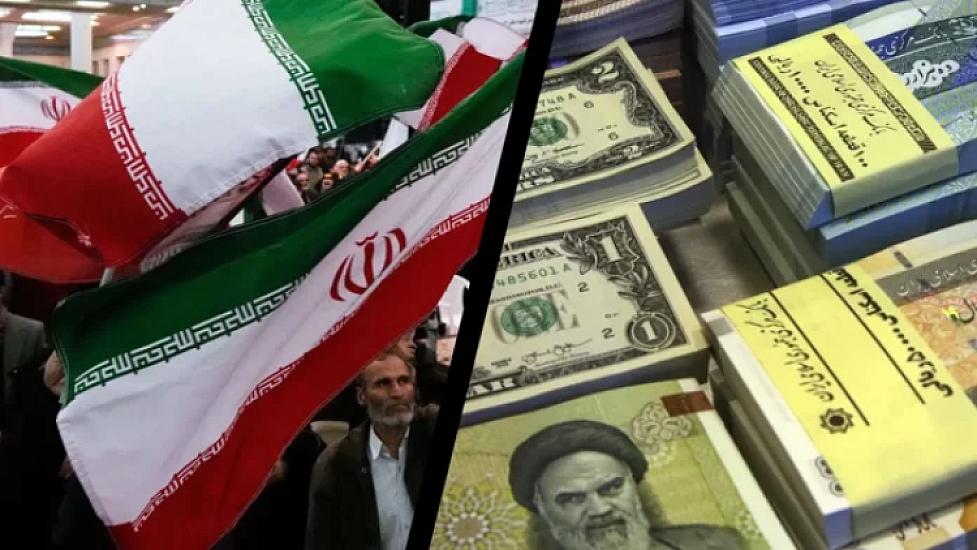
The main slogan of the Islamic Revolution in Iran was "Independence, Freedom, Islamic Republic." The revolutionaries put forward the complete liberation of the country's politics and economy from the influence of foreign powers, especially the US and Great Britain, as their primary goal. Their greatest promise was to bring freedom to society by ending the absolutist dictatorship of Shah Mohammad Reza Pahlavi and the persecutions of SAVAK (the secret police).
The Islamic Republic aimed to abolish the monarchy once and for all and establish a new system in which all state laws were based on Islamic law (Sharia). The period when the revolution occurred coincided with the years of the Cold War. The ideology of the revolution rejected the hegemony of both the US (capitalist West) and the USSR (communist East). The main ideal was to pursue an independent "third way" policy that would lead the Islamic world without joining any global bloc. However, in the half-century that followed, everything happened in reverse; the economy became entirely dependent on Western sanctions. SAVAK was replaced by the more terrible ETELAT, and Islamic law was applied in favor of the privileged class. Now, before our eyes, we are witnessing the historical collapse of a half-century-old illusion.
Once, a few years before Khomeini's revolution, Iran was one of the strongest 20 economies, but today it is a typical example of a great collapse. Under Ali Khamenei's leadership, the country dropped to 35th place and fell to its lowest historical position — 44th in 2019. The country has lost not only its economic power but also its global influence. This is a direct result of decades-long sanctions, deeply entrenched corruption, and incompetent governance.
Figures known for January 2026 demonstrate the real impact of Washington's "maximum pressure" policy: production had decreased by 81,000 barrels per day. Even China, Tehran's largest and almost sole loyal customer, had reduced oil purchases. The average of 1.4 million barrels in 2025 had already shrunk to 1.1 million barrels.
Billions Were Spent on Mythical Goals
Iran's mythical "axis of resistance" strategy, a foreign policy pursued blindly, exceeding its actual potential and ignoring contemporary global trends, and a pressure policy on neighboring countries meant that the oil sold with great difficulty was not spent for the welfare of the people but on unknown, dream-based goals of the religious-political leadership. Support for the Bashar al-Assad regime in Syria, Hezbollah, Hamas, and various proxy forces' propaganda networks caused a large part of Iran's oil revenues to be spent extravagantly.
The Bashar al-Assad regime, which resisted for 13 years and cost Iran billions of dollars, fell in 12 days. In September 2024, Israel's "preemptive attack" on Hezbollah in Lebanon and Syria shook the organization and reduced its dependence on Tehran. The killing of Hamas leaders and the successful military operations against the organization during 2023-25 shattered Iran's "axis of resistance" strategy. Iran suffered a severe geopolitical knockout.
Official figures revealed in February 2025 showed that Iran could not endure much longer. Iran had also suffered a severe defeat on the economic front. Eleven billion dollars in oil revenues were either frozen in corrupt accounts or flowed entirely into separate pockets. The parliament's budget report stated that out of the 21 billion dollars of oil sold during the eight months of 2025, only 13 billion entered the state treasury. The remaining 8 billion dollars vanished into the shadow economy.
Nature has granted Iran great wealth; 20% of the country's oil reserves and 30% of its gas reserves lie in fields jointly exploited with neighboring countries. However, due to the chokehold of sanctions on investments and aging, deteriorating infrastructure, Iran cannot extract its share. While neighboring states produce 2.16 million barrels of oil and 609 million cubic meters of gas daily from these fields, Iran manages only 583,000 barrels of oil and 498 million cubic meters of gas. Calculated at current market prices, this shortfall causes an annual loss of exactly 40 billion dollars to Iran.
How Sanctions Worked Like Shackles
In July 2015, Iran signed the "Joint Comprehensive Plan of Action" (nuclear agreement) with the 5 permanent members of the UN Security Council and Germany. Throughout that year, the economy was still under the influence of previous heavy sanctions, and the gross domestic product (GDP) shrank by about 1.3%. However, there was great optimism in society and markets. Inflation began to slow, and the national currency (rial) stabilized because everyone was expecting the full lifting of sanctions in 2016.
In January 2016, sanctions were officially lifted. Billions of frozen dollars were released, and most importantly, Iran regained the right to sell oil on global markets. According to World Bank data, Iran's economy grew fantastically by 13.4% in 2016. This was one of the highest economic growth rates worldwide for that year.
In 2017, growth returned to a normal level of 3.8%. The promised flood of foreign investments due to the nuclear deal did not materialize.
In May 2018, US President Donald Trump unilaterally announced withdrawal from the nuclear deal and launched the "maximum pressure" campaign. With the reimposition of sanctions, by the end of 2018, Iran's economy contracted more than 3%. Foreign companies urgently left the country. Due to the renewed cuts in oil revenues, there was a shortage of foreign currency. The rial lost about 70% of its value against the dollar within the year. Inflation spiraled out of control again, and the wave of impoverishment returned more intensely than before. This showed once again that the country is entirely dependent on sanctions.
The Ruling Elite Looted and Destroyed Iran
All these years, not only resources but also lost decades were wasted. According to economists' calculations, the total value of the economic opportunities deprived to the country in the last 30 years — foreign investment, banking services, and export revenues — amounts to 3 trillion dollars. This is ten times larger than Iran's current annual GDP.
In parallel, there was massive capital flight. From 2015 to spring 2025, exactly 145 billion dollars were illegally taken out of the country. This amount equals 40% of the total oil revenues of those years. Iran's real private sector accounts for only 15% of foreign trade. This shows that those who plunder the country are precisely individuals loyal to the regime, privileged bureaucrats, politicians, military officers, and their controlled networks.
The harshest blow of this economic decline, however, falls directly on ordinary citizens. Today, inflation in Iran has reached its highest historic level since World War II. According to independent reports for 2025-2026, while general inflation exceeds 60%, food inflation affecting ordinary people's daily lives has surpassed 100-110%. The national currency, the toman, is rapidly losing value against the US dollar. The government's salary raises, however, are only about 20%, far below inflation, which means people's incomes are rapidly eroding and wages barely suffice to buy plain dry bread.
Unstoppable price increases and economic contraction have created a wave of mass impoverishment in the country. Currently, about 36-40% of Iran's population (more than 30 million people) is forced to live below the poverty line. The "middle class," considered the backbone of society, has almost entirely disappeared. Families who previously led a normal lifestyle now fight just to meet food needs and survive. Even salaried individuals have turned into a "working poor" army because their earnings cover only a tiny fraction of rising expenses.
Another disastrous side of the economic collapse is that the country is cut off from global development and condemned to deep technological backwardness. Due to sanctions and lack of foreign investments, Iran is isolated from global innovations and modern equipment. Strict internet censorship, outdated infrastructure, and forced "local production" policies compel the industry to operate with poor quality and decades-old technology. This internal suffocating environment and economic hopelessness also cause a strong "brain drain" – the country’s most educated specialists and youth head abroad, fundamentally harming Iran’s future recovery and development potential.
Today, Turkey's economy is approximately four times larger than Iran's by volume. Before the Islamic Revolution, the per capita income levels of both countries were very close. According to 1980 data, Iran's per capita income was approximately $2,374, and Turkey's was $2,169. In 1979, Iran's per capita income was recorded as $2,352, and Turkey's as $2,013, which indicates about a 17% superiority of Iran.
Zaur İbrahimli,
Chairman of the “Priority” Center for Social-Economic Research